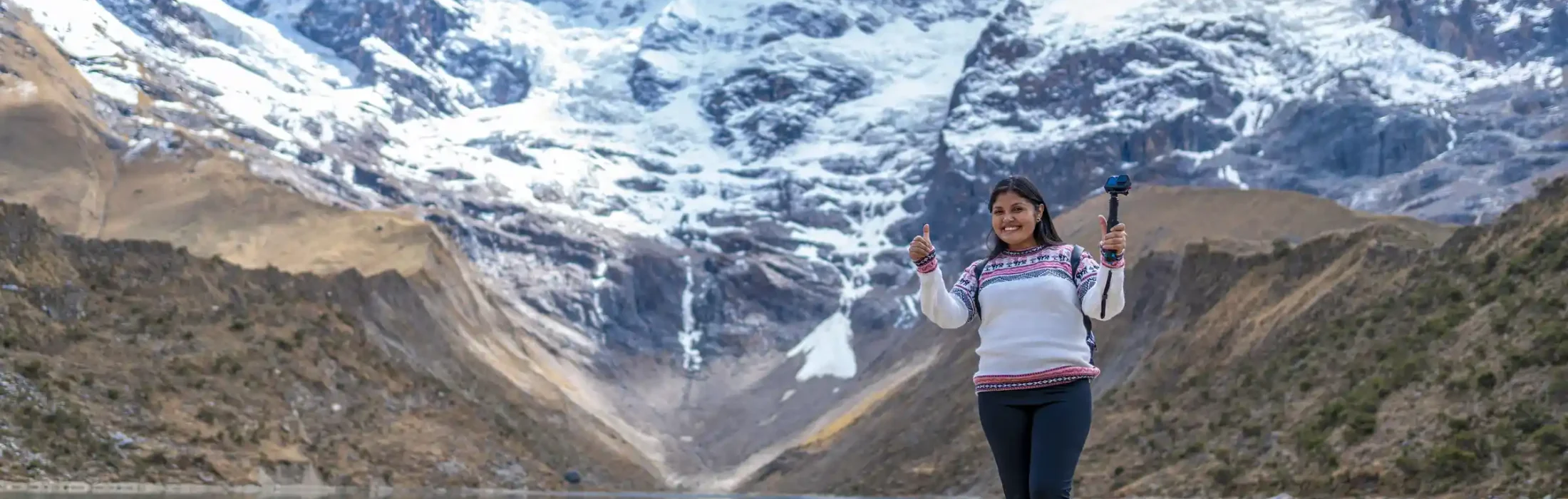
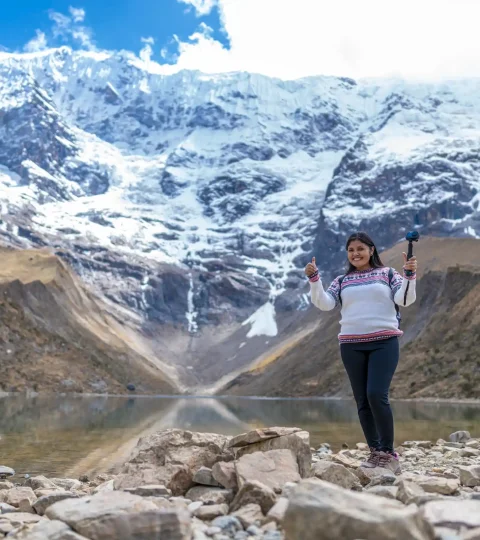
Most trekkers approach the Salkantay Trek as a physical challenge—a grueling 4-day mountain expedition culminating in the iconic Machu Picchu. But few understand the profound spiritual dimension woven into every step of this sacred journey. While thousands of travelers hike toward Machu Picchu annually, fewer than half explore the deeper meaning behind Salkantay Mountain itself, the 4,630-meter peak that dominates the trek and holds centuries of Incan spiritual significance.
This article explores a lesser-discussed aspect of the Salkantay Trek: the intersection of ancient Incan cosmology, modern altitude physiology, and personal transformation that occurs when trekkers engage with the mountain’s sacred essence rather than simply conquering its peaks.
In Quechua cosmology, mountains are not mere geological formations—they are Apus, powerful deities that govern the land and influence the spiritual well-being of communities. Salkantay, known as the “Savage Mountain,” has been revered as an Apu for over 1,000 years, long before the Spanish conquest and the establishment of Machu Picchu as a tourist destination.
The indigenous peoples of the Cusco region traditionally performed rituals at Salkantay’s summit, leaving offerings of coca leaves and alcohol to honor the Apu and request safe passage through its territory. These practices continue today, yet most modern trekkers remain unaware they’re traversing sacred ground—not as tourists, but as pilgrims engaging in an ancient ceremonial route.
While Machu Picchu dominates contemporary tourism discourse, historical evidence suggests that Salkantay held equal or greater spiritual importance in Incan civilization. The mountain likely served as a sacred pilgrimage site and a marker of territorial boundaries for the Incan Empire. The Salkantay Trek itself follows ancient trade and ritual routes used by Incan priests and nobility for centuries.
The prominence of Machu Picchu in modern tourism is partly accidental—Spanish conquistadors never discovered the citadel during their conquest, preserving it for later Western rediscovery. Salkantay, however, was impossible to ignore, standing as a towering guardian over the entire region. Understanding this historical context transforms the Salkantay Trek from a mere hiking challenge into a journey through layers of cultural and spiritual significance.
Trekkers often discuss the physical challenges of altitude sickness—headaches, fatigue, shortness of breath. However, emerging research suggests that high-altitude environments trigger subtle neurological changes that enhance introspection and emotional processing, creating what some researchers call “altitude-induced consciousness expansion.”
At 4,630 meters (15,190 feet), the human brain experiences reduced oxygen availability, which paradoxically increases blood flow to the prefrontal cortex—the region responsible for self-reflection and emotional regulation. This physiological shift, combined with the sensory isolation of high mountains and the rhythmic exertion of trekking, creates a natural state conducive to introspection and spiritual awakening.
Indigenous communities have long understood this phenomenon intuitively. The timing of rituals at Salkantay’s summit wasn’t arbitrary; high-altitude ceremonies were deliberately conducted at elevations where the brain’s neurochemistry naturally facilitates deeper spiritual experiences and connection to the divine.
Studies on mountaineers and high-altitude trekkers reveal that prolonged exposure to reduced oxygen levels (hypoxia) can temporarily enhance sensory perception paradoxically. Many trekkers report heightened awareness of natural sounds, colors, and subtle environmental changes as they ascend. Some describe a meditative quality that emerges naturally during the trek, requiring no conscious effort.
This involuntary shift in consciousness aligns with traditional meditation practices, where altered breathing patterns and focused attention create similar neurological states. The Salkantay Trek essentially becomes a four-day meditation retreat, with the mountain environment and altitude naturally guiding participants toward deeper states of awareness.
Unlike trails that traverse singular ecological zones, the Salkantay Trek uniquely connects three distinct biomes: the high-altitude páramo grasslands, cloud forests, and Amazonian lowland jungle. This extraordinary biodiversity concentration is largely absent from popular hiking blogs and travel guides, yet it represents one of the trek’s most remarkable features.
Starting at Soraypampa (3,800m) in the cold páramo and descending to Lucmabamba (2,000m) in the cloud forest, trekkers witness a compressed version of Peru’s entire altitudinal vegetation gradient. This ecological diversity mirrors the Incan understanding of ayni—the principle of reciprocal balance and complementarity between opposing forces.
The three ecosystems trekkers traverse—mountain, cloud forest, and jungle—represent the three levels of Incan cosmology: Hanan Pacha (the upper realm of gods and mountains), Kay Pacha (the middle realm of humans), and Uku Pacha (the lower realm of the underworld). Walking through these distinct landscapes becomes a physical embodiment of Incan spiritual philosophy.
Few trekkers expect to encounter endemic bird species found nowhere else on Earth during their Salkantay Trek. The Andean condor, giant hummingbirds, and cloud forest tanagers represent living connections to pre-Columbian ecosystems that Incan priests themselves would have observed during their mountain pilgrimages.
Local guides rarely emphasize that these species were considered sacred in Incan culture. The condor, in particular, symbolized the upper realm (Hanan Pacha) and the connection between earth and sky. Encountering these birds during your trek is not merely a wildlife viewing experience—it’s a direct link to how Incan peoples understood their relationship with the natural world.
One of the Salkantay Trek’s unique features is the first night’s accommodation in star domes at Lucmabamba—transparent geodesic structures allowing unobstructed views of the night sky. This accommodation choice, while marketed primarily for its visual appeal, has profound physiological implications rarely discussed in trek reviews.
Exposure to the night sky at high altitude resets the human circadian rhythm in ways that modern artificial lighting prevents in everyday life. The star domes eliminate light pollution entirely, exposing trekkers to the true magnitude of the Milky Way visible from the Southern Hemisphere. This astronomical exposure triggers melatonin production and deepens sleep quality, even despite altitude-related sleep disruptions.
Additionally, research on sleep in high-altitude environments shows that starlight exposure—particularly the absence of artificial light—accelerates altitude acclimatization by stabilizing circadian rhythms. Trekkers who sleep in star domes actually acclimatize more efficiently than those sleeping in enclosed shelters, enhancing their performance on Day 2’s challenging descent.
The ancient Incan civilization relied on sophisticated astronomical knowledge. Star positions determined agricultural cycles, religious ceremonies, and long-distance navigation. By sleeping under the stars in the Peruvian highlands, modern trekkers unknowingly replicate the sensory experience of Incan travelers who navigated these same routes under the same constellations.
The Salkantay Trek’s positioning allows visibility of the Southern Cross and the dark clouds of the Coalsack Nebula—celestial features that held profound spiritual meaning in Incan cosmology. Sleeping beneath these stars reconnects contemporary hikers with thousands of years of human spiritual observation of the same heavens.
The Salkantay Trek’s reliance on horses and muleteers—local guides who manage pack animals—represents one of the last intact examples of high-altitude pack animal husbandry developed over centuries. Yet few trekking guides explain the sophisticated knowledge system these professionals maintain.
Muleteers possess intimate understanding of mountain microclimates, water sources, weather pattern changes, and safe camping locations—knowledge accumulated through generations of mountain experience. They are not merely logistical support; they are custodians of Andean ecological wisdom that transcends written records.
The presence of muleteers and horses on the trek embodies the principle of ayni mentioned earlier: reciprocal exchange and mutual support. Trekkers depend on muleteers; muleteers depend on the trail’s continued use to sustain their livelihoods. This creates a web of interdependence that reinforces the Incan philosophical principle that individual success depends on collective balance.
Responsible Salkantay Trek operators ensure horses carry loads no heavier than 7 kilograms and are rotated regularly to prevent overexertion. However, this aspect remains largely unexamined in mainstream trekking blogs. Understanding the ethics of animal use on the trail invites trekkers to engage in conscious participation—a choice to be present participants rather than passive tourists.
Many trekkers report that interaction with horses during the trek shifts their perspective on animal consciousness and interspecies communication. These informal relationships often become among the most memorable aspects of the journey, yet they’re rarely highlighted in trek descriptions.
The dramatic environmental shift from Salkantay’s high-altitude austerity to Lucmabamba’s cloud forest abundance on Day 2 represents more than a change in scenery. It embodies the Incan philosophical concept of diarchía—the coexistence of opposing yet complementary forces.
Day 1 strips trekkers of comfort and reduces existence to fundamentals: cold, altitude, and endurance. Day 2 introduces abundance, lushness, and the sensory richness of jungle ecology. This intentional contrast—whether designed consciously or emerging through the trek’s natural geography—creates a profound learning experience about human adaptability and the spectrum of environmental existence.
Indigenous communities in the region traditionally practiced seasonal migration between high mountains and lower valleys, ensuring spiritual and physical balance through exposure to diverse environments. The Salkantay Trek inadvertently replicates this balancing practice in compressed form.
While Machu Picchu dominates trekking narratives, the Llactapata ruins encountered on Day 2 remain largely undiscussed. Yet archaeological evidence suggests Llactapata was continuously occupied for centuries before Machu Picchu reached its height, serving as a way station for travelers on mountain routes.
The positioning of Llactapata—offering direct views of Machu Picchu from the valley below—suggests it may have served as a ceremonial vantage point, a place where Incan pilgrims first glimpsed the sacred citadel after arduous mountain travel. Walking among Llactapata’s ruins creates an unexpected connection to travelers who made this same journey centuries ago, experiencing similar awe upon glimpsing Machu Picchu’s terraces.
The Salkantay Trek’s route through Llactapata wasn’t arbitrary. Its positioning at the junction between high mountains and jungle, between Salkantay’s sacred peak and Machu Picchu’s sanctuary, suggests intentional geomantic planning. The trail may have been deliberately routed to ensure trekkers would experience the full spectrum of Incan spiritual geography—from the highest Apu to the most sacred urban sanctuary.
This understanding transforms Llactapata from a brief archaeological curiosity into a deliberate threshold experience, a liminal space where trekkers transition from mountain to jungle, from high to low, from austere to abundant.
The Salkantay Trek, whether recognized explicitly or not, functions as a modern pilgrimage path. Pilgrimage—travel to sacred sites for spiritual purposes—is one of humanity’s oldest spiritual practices, documented across every major religion and indigenous tradition.
Unlike Machu Picchu visits (which can be completed in a single day), the Salkantay Trek requires multi-day commitment, physical endurance, and vulnerability. These elements—time, effort, sacrifice, and exposure—are essential components of traditional pilgrimage experience. They create what scholars call “liminality,” a threshold state where participants exist outside their normal social roles and conventional consciousness.
This liminal state facilitates personal transformation. Trekkers emerge from the Salkantay Trek fundamentally changed, not because they’ve accomplished a difficult physical feat, but because they’ve undergone a ritualized journey that naturally induces introspection and perspective shift.
Most pilgrimage traditions include three phases: departure (separation from ordinary life), liminality (the pilgrimage journey itself), and reincorporation (return to society with transformed perspective). The Salkantay Trek naturally facilitates the first two phases, but the integration phase remains largely unaddressed.
Thoughtful trekkers can intentionally engage with the reincorporation phase by maintaining practices initiated on the trek—daily reflections, gratitude practices, or deepened environmental awareness—to sustain the transformation beyond the trail.
While most trek guides emphasize cardiovascular fitness, the trek’s spiritual dimensions benefit from mental preparation. Meditation practices that develop equanimity, breath awareness techniques that prepare the body for altitude, and intention-setting rituals can fundamentally shift the trek experience.
Many experienced trekkers report that pre-trek meditation practice enhanced their ability to remain present during the journey, reduced anxiety about altitude challenges, and deepened their connection to the landscape. These benefits emerge not from mystical thinking, but from genuine neurophysiological responses to contemplative practice.
Setting a clear intention before beginning the trek creates a cognitive framework that enhances perception and memory formation. Rather than hiking “to see Machu Picchu,” trekkers who establish deeper intentions—healing from loss, seeking clarity about life direction, celebrating personal transformation—report significantly more meaningful experiences.
This distinction between tourism and pilgrimage hinges on conscious intention. The same physical route traversed by a tourist seeking Instagram photos and one seeking spiritual insight yields entirely different experiences, despite identical external circumstances.
Understanding Salkantay as sacred ground—genuinely sacred to indigenous communities who still maintain spiritual relationships with the mountain—creates an ethical obligation for trekkers. This understanding transforms how conscientious participants approach waste management, interactions with local guides, and the broader impact of their presence on the ecosystem.
Responsible operators implement strict environmental protocols: pack-out-all-waste practices, limiting group sizes, employing local guides and muleteers fairly, and contributing portions of trek fees to community development projects. Choosing operators committed to these principles becomes an act of spiritual integrity—respecting the sacred nature of the land while supporting the communities who are its true stewards.
Paradoxically, responsible trekking can support conservation of Salkantay’s ecosystems. Revenue from trekking operations funds local environmental protection initiatives, creates economic incentives for communities to preserve forests rather than clear them for agriculture, and raises global awareness of Peru’s ecological significance.
The key distinction lies in conscious participation: trekking as pilgrimage and cultural exchange differs fundamentally from trekking as mindless consumption. Thoughtful trekkers become advocates for the landscapes they traverse.
Research on high-altitude environments identifies specific elevation ranges that optimize certain physiological responses. At Salkantay’s 4,630 meters, trekkers experience sufficient altitude stress to trigger adaptive responses (improved oxygen utilization, increased red blood cell production) without reaching elevations where acute mountain sickness becomes severe.
This “sweet spot” elevation explains why many trekkers report that despite the physical challenge of Salkantay, they actually feel profoundly healthy upon return to sea level. Their bodies undergo genuine adaptation that creates lasting improvements in cardiovascular fitness and oxygen utilization efficiency.
Beyond physical adaptation, the neurological changes induced by sustained high-altitude exposure create measurable improvements in cognitive flexibility, emotional regulation, and creative problem-solving. These aren’t mystical claims—they’re documented in peer-reviewed research on mountaineers and high-altitude athletes.
The Salkantay Trek essentially offers a four-day neurological upgrade, complimentary with trekking package. Many trekkers find themselves thinking more clearly, making decisions more confidently, and approaching life challenges with enhanced perspective weeks after completing the trek.
The Salkantay Trek stands at an intersection of ancient spiritual tradition, modern adventure tourism, ecological wonder, and personal transformation. Yet most contemporary accounts reduce it to a difficult hike preceding the main attraction (Machu Picchu).
This article has explored dimensions of the Salkantay Trek that remain largely absent from mainstream trekking blogs and guidebooks: its role in Incan cosmology as a pilgrimage route to sacred Apu mountains, the profound neurophysiological transformation triggered by sustained altitude exposure, the ecological uniqueness of its multi-biome traverse, and the authentic human connections facilitated through interaction with muleteers and local communities.
The choice before potential trekkers is not simply whether to hike Salkantay, but how to engage with it. Tourism reduces it to a destination; pilgrimage honors it as sacred ground and catalyzes genuine transformation. The physical route remains identical, but the internal experience differs fundamentally based on conscious intention and depth of engagement.
For those willing to approach the Salkantay Trek as more than a ticking of boxes, as a genuine pilgrimage journey through sacred Andean landscape, the mountain offers something far more valuable than photographs or achievement: direct experience of transformation, connection to thousand-year-old spiritual traditions, and return to everyday life fundamentally altered by the journey.
If the Salkantay Trek’s deeper dimensions resonate with you, consider approaching your trek preparation as spiritual practice, not merely fitness training. Research responsible operators committed to supporting local communities. Set intentions before beginning the trek. Plan post-trek practices to integrate the transformation initiated on the mountain.
The Salkantay awaits—not as a mountain to conquer, but as a teacher offering ancient wisdom to those willing to listen.


